BALANCE BODY FLUIDS.
Sodium helps regulate fluid outside cells.

Your next good choice starts here.
Continue shoppingFree US shipping. No minimum order.

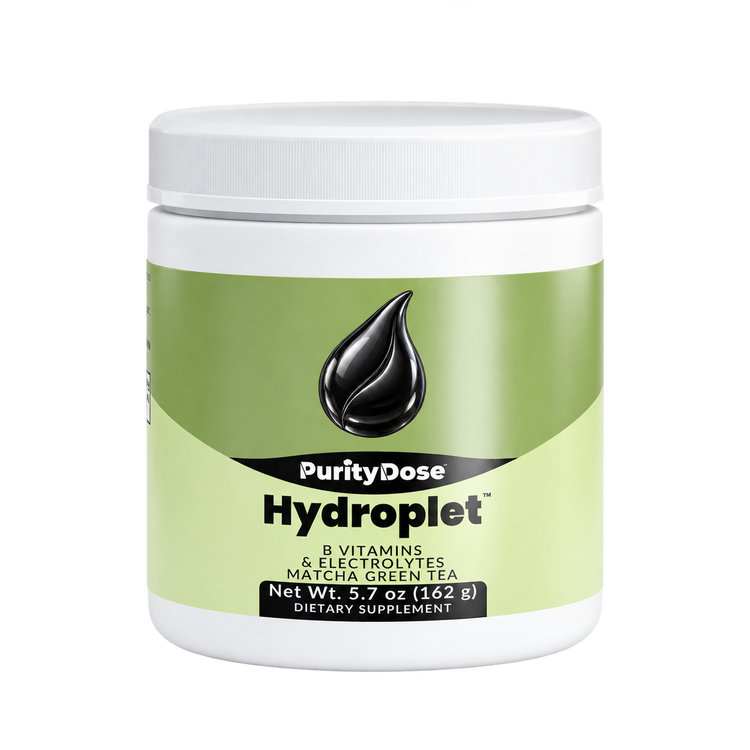
B Vitamins & Electrolytes · Matcha Green Tea
Electrolytes replace minerals lost in sweat to support hydration.
Couldn't load pickup availability
Standard US shipping is free, with no minimum order. See our Shipping Policy for fulfillment and delivery information.
We stand behind our products and want you to shop with confidence.
That’s why we offer a 30-Day Money-Back Guarantee.
Read the guarantee terms1 scoop (5.4 g). As needed; follow the directions on your pack. Mix each scoop with 14–20 fl oz (414–591 ml) of water. For two scoops, use 28–40 fl oz (828–1,183 ml).
Choose One Time Purchase for a single order. Subscribe & Save renews at the frequency and price shown in the purchase selector.
Standard US shipping is free. There is no minimum order.
Read your pack before use and follow its directions and cautions. Do not exceed the label amount.
Check ingredient quantities and allergens on the full label. Amounts are per full serving unless stated otherwise.
 Open full-size label
Always check the label on the pack you receive.


Hydroplet supplies sodium, potassium, calcium and magnesium. Each plays a different role when you move and sweat.
Sodium helps regulate fluid outside cells.
Potassium helps maintain the electrical balance cells need to send signals.
Calcium and magnesium help muscles work normally.
Sweat carries water and minerals out of the body. Sodium helps regulate fluid around cells, while potassium helps cells maintain the electrical balance they use to send signals. Calcium and magnesium play different roles in normal muscle contractions and nerve function.
Water supplies fluid. Electrolytes are charged minerals involved in fluid balance, nerve signals and muscle contractions.
Sodium replacement has been studied after exercise because sweat removes sodium as well as water. Hydroplet supplies 100 mg per scoop. Match your fluid and food intake to the activity—not just the flavor.

Sodium is the main charged mineral in the fluid around cells. It helps regulate how much water stays in that space. Sodium also moves into nerve cells as they send electrical signals. Sweat carries sodium and water out of the body.

Most potassium is inside cells. Together with sodium, it helps maintain the difference in electrical charge across the cell membrane. Nerves rely on that difference to send signals, and muscles use it to respond and contract.

When a nerve activates a muscle, calcium is released inside the muscle cells. This lets the fibers pull together and produce movement. Calcium also combines with phosphate to form the mineral that gives bones their hardness.

Magnesium binds to ATP, the molecule cells use to transfer energy. Many enzymes use this magnesium–ATP complex to carry out their work. Magnesium also contributes to normal nerve signaling and muscle function.

Sodium helps maintain fluid balance outside cells. Potassium is concentrated inside cells, where it helps maintain the electrical difference across the cell membrane. That difference allows nerve impulses to travel and muscles to respond to the signals they receive.
One scoop goes into 414–591 ml of water. A lighter mix for a longer drink. Shake or stir until dissolved.
Count the rest of your day too: meals, water, heat and sweat losses all play a part in hydration.
The body converts thiamin, or vitamin B1, into a helper molecule that certain enzymes need. One of those enzymes processes pyruvate, a compound made when cells break down glucose. That step helps carry energy from carbohydrates into the next stage of metabolism.
Cells turn riboflavin, or vitamin B2, into two enzyme helpers called FMN and FAD. They pick up electrons in one reaction and pass them to another. This transfer helps cells capture usable energy as they break down nutrients.
Cells use niacin, or vitamin B3, to make NAD. As cells break down carbohydrates, fats, and proteins, NAD collects electrons and carries them to other reactions. That transfer helps cells convert energy from food into ATP, which powers their work.
The active form of vitamin B6 helps enzymes move chemical groups between amino acids. This lets the body turn amino acids into compounds it can use, including some of the chemical messengers that nerve cells need to communicate.

Your cells use pantothenic acid, or vitamin B5, to make coenzyme A. Coenzyme A carries small chemical groups between reactions, including the steps that build fatty acids and break them down for energy.
Folate helps cells make nucleotides, the building blocks of DNA. Before a cell divides, it needs to copy its DNA so each new cell receives a complete set of instructions.

Vitamin B12 works with folate in reactions that allow developing red blood cells to mature normally.

Buying confidence
Standard US shipping is free on every order. No minimum spend.
Read delivery estimatesNot satisfied? Email us within 30 days of delivery for a product refund, even if opened. No return of opened products required. Shipping fees excluded.
Read guarantee termsAsk us about the formula, directions or your order. For advice about a medical condition or medicines, speak with your clinician.
Contact Purity Dose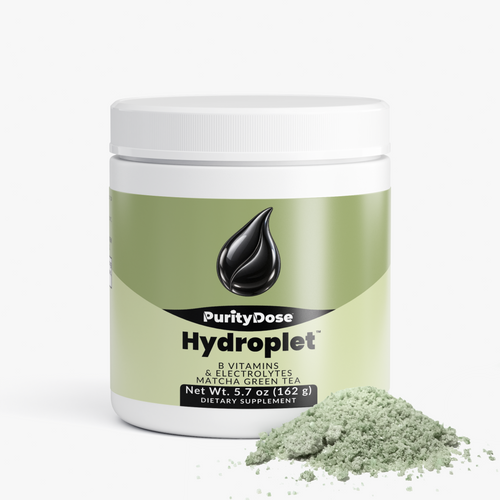
Your next step
$39One-time price
Your formula. Your supply.
Compare pack sizes and the current price per pack.
Start with one sealed pack.
1 sealed pack30 full servings
You save $5 USD
Free US shipping — no minimumKeep extra sealed packs on hand.
3 sealed packs90 full servings
You save $12 USD
Free US shipping — no minimumChoose a larger supply in one order.
6 sealed packs180 full servings
You save $50 USD
Free US shipping — no minimumThis formula has variable, occasional or course-dependent use, so offers show packs and full servings instead of promising a fixed number of months. Follow your product label.
Bundle savings are measured against buying the same packs individually at the current single-pack price. No subscription or automatic refills.
It is a hydration supplement with matcha green tea flavor. Its label lists citrate minerals and B vitamins, not matcha leaf powder.
One scoop supplies 100 mg sodium. It also supplies 200 mg potassium, 40 mg calcium and 20 mg magnesium. Sweat losses vary, so keep your meals and activity in mind.
No caffeine amount or tea ingredient is listed on the facts panel. Do not treat the flavor name as a measured caffeine dose.
Mix each 5.4 g scoop into 414–591 ml of water. Two scoops need twice the water. Follow the maximum on your pack rather than continually adding scoops.
The panel lists 2 g total carbohydrates and 10 calories per scoop. Dextrose is listed among the ingredients, so this is not a sugar-free claim.
They have different roles: Hydroplet supplies electrolytes, while Aminostride supplies amino acids. Check both labels and your other supplements for overlapping vitamins before combining.
Thirty drinks at one 5.4 g scoop each. More scoops per drink use the tub faster.
Ask your clinician first if you have kidney or heart problems, a prescribed fluid or mineral restriction, or medicines affecting potassium or sodium.